

Smart Home Devices in 2026: Transforming Your Home with Next-Gen Technology

Introduction Smart Home Devices in 2026 are poised to completely redefine how we interact with our living spaces. No longer just a convenience or a luxury, smart homes are becoming a standard for modern living. Advances in artificial intelligence (AI), the Internet of Things (IoT), voice recognition, and home automation technologies are turning ordinary homes into intelligent ecosystems that anticipate our needs, enhance security, and improve efficiency. By 2026, homes will do more than just respond to commands; they will predict your behavior, optimize energy usage, and even manage household tasks autonomously. This article explores the trends, technologies, benefits, challenges, and future of smart home devices. What Are Smart Home Devices? Smart home devices are electronic gadgets that connect to the internet and allow users to control or monitor their home environment remotely. These devices range from smart thermostats and lighting to security systems, kitchen appliances, and entertainment platforms. Some common examples include: By 2026, these devices will integrate AI and predictive algorithms, enabling them to anticipate user preferences and adapt without manual input. For example, a smart thermostat might lower the temperature when you leave for work, and a connected coffee machine could start brewing automatically when your alarm goes off. Top Trends in Smart Home Devices in 2026 1. AI and Machine Learning Integration Artificial intelligence will be the backbone of next-generation smart homes. Devices will learn patterns of behavior, identify preferences, and provide proactive recommendations. For instance: According to Statista, the global AI-powered smart home market is expected to grow exponentially by 2026, driven by consumer demand for convenience and efficiency. 2. IoT and Fully Interconnected Homes The Internet of Things (IoT) enables devices to communicate with each other. In 2026, homes will function as a fully integrated ecosystem: This interconnected ecosystem reduces manual intervention, increases energy efficiency, and enhances overall user experience. 3. Voice and Gesture Control While voice control has been popular since 2015, by 2026, it will be far more intuitive and capable of handling complex multi-device commands. Gesture control and even eye-tracking may become mainstream, allowing touchless interaction with devices. Imagine adjusting your thermostat by simply pointing at it, or turning off lights by gesturing toward the switch. These features will improve accessibility for people with disabilities and make everyday tasks seamless. 4. Enhanced Security and Privacy Security is a major concern for smart homes. With more devices connected online, the risk of cyberattacks increases. By 2026, smart home security will include: Privacy-focused smart devices will also allow users to control what data is shared with manufacturers and third-party services. 5. Energy Efficiency and Sustainability Smart home devices in 2026 will help users reduce energy consumption and environmental impact. Features may include: These technologies will not only lower utility bills but also promote a greener, more sustainable lifestyle. 6. Smart Healthcare Integration Smart homes are expanding beyond comfort and convenience to health and wellness: By 2026, smart homes could actively contribute to preventive healthcare and improve overall quality of life. 7. Entertainment and Lifestyle Enhancements Smart home devices will also transform entertainment and daily routines: The integration of lifestyle and entertainment into smart homes ensures a fully connected, enjoyable, and personalized living experience. Impact on Daily Life Smart Home Devices in 2026 will make life: Challenges and Solutions Despite the enormous potential, smart homes face challenges: By addressing these challenges, smart homes can become accessible, secure, and beneficial to all users. Global Market and Adoption The global smart home market is projected to reach over $174 billion by 2026 (Statista). Growth is driven by: Countries like the US, China, and parts of Europe are leading in adoption, while emerging markets are catching up with affordable, entry-level smart devices. The Future Outlook By 2026, smart home devices will: The smart home of 2026 is not just about gadgets — it is about a connected, intelligent, and responsive living environment. Conclusion Smart Home Devices in 2026 will transform the way we live, work, and interact with our environment. With AI, IoT, and connected devices, homes will anticipate needs, enhance security, save energy, and improve well-being. As adoption grows, smart homes will no longer be a luxury but a necessity for a modern, connected lifestyle. The future is smart, and the home of 2026 will be more than just a place to live — it will be a personal assistant, a security hub, a wellness center, and an energy manager all in one.

Read More

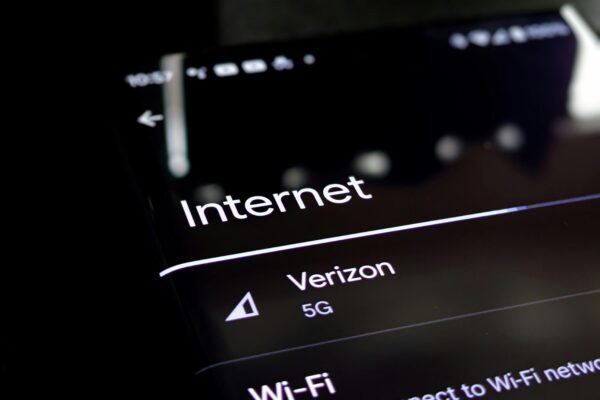
5G Connectivity and the Future of Mobile Internet in 2026: A Game-Changing Shift

Introduction The year 2026 marks a new era in wireless technology as 5G connectivity and the future of mobile internet reshape how we communicate, work, and interact with the world. With unprecedented speeds, ultra-low latency, and the ability to connect billions of devices, 5G is not just an upgrade from 4G — it’s a revolution. Businesses, governments, and consumers are preparing for a digital ecosystem that will be faster, smarter, and more connected than ever. What is 5G Connectivity? 5G, the fifth generation of mobile networks, promises to deliver: Unlike 4G, which primarily focused on improving mobile broadband, 5G is designed to connect people, devices, and machines at a scale previously unimaginable. Key Benefits of 5G in 2026 1. Faster Mobile Internet Speeds Streaming 4K and even 8K videos on your mobile device will be seamless. Cloud gaming and AR/VR applications will feel like reality, with no buffering or lag. 2. Ultra-Low Latency for Real-Time Applications 5G’s low latency enables technologies like autonomous cars, remote robotics, and telemedicine. Imagine a surgeon operating on a patient miles away with zero delay — this is the power of 5G. 3. Massive IoT Expansion Smart cities, connected homes, and industrial automation will thrive under 5G connectivity. Billions of sensors and devices can communicate simultaneously, enabling smarter urban planning and more efficient resource management. 4. Enhanced Business Opportunities Enterprises can leverage 5G to enhance cloud computing, deploy AI-powered solutions, and create immersive customer experiences. Industries like healthcare, manufacturing, and entertainment will see transformative benefits. How 5G Will Transform Mobile Internet The future of mobile internet in 2026 is not just about speed; it’s about connectivity everywhere. With 5G, the mobile internet becomes a platform for innovation rather than just a tool for communication. Challenges Ahead Despite its potential, 5G adoption comes with challenges: However, industry leaders and governments are actively working to overcome these barriers to ensure global access. Global Impact of 5G Connectivity By 2026, 5G is expected to contribute trillions of dollars to the global economy. According to GSMA, 5G adoption will boost mobile GDP, create millions of jobs, and enable innovations across multiple sectors. Additionally, Qualcomm highlights that 5G will accelerate AI, edge computing, and autonomous technology, making industries more efficient and competitive. The Future Outlook The mobile internet landscape of 2026 will be radically different from today. Smartphones will be just one part of a vast interconnected ecosystem that includes: This interconnected world powered by 5G connectivity will redefine productivity, entertainment, and social interactions. Conclusion 5G connectivity and the future of mobile internet in 2026 represent a technological leap that will change the way we live and work. From blazing-fast speeds to revolutionary applications in healthcare, education, and smart cities, 5G will touch every aspect of daily life. While challenges remain, the potential benefits far outweigh the obstacles, making 5G a true game-changer for the digital age.

Read More
pexels obi onyeador 1787470 13029652 (1)

5G Connectivity and the Future of Mobile Internet in 2026

introduction 5G connectivity is redefining the future of mobile internet and powering the next generation of digital experiences. With dramatically faster speeds, increased bandwidth, and ultra-low latency, 5G connectivity enables innovations that were impossible under previous network standards such as 3G and 4G LTE. As global adoption accelerates in 2026, industries including healthcare, transportation, manufacturing, entertainment, and smart infrastructure are leveraging 5G to enhance performance, improve efficiency, and introduce fully connected services at scale. H2: What is 5G Connectivity? 5G connectivity is the fifth generation of mobile network technology. Compared to 4G LTE, 5G connectivity offers: ✔ Enhanced mobile broadband (EMBB)✔ Ultra-reliable low-latency communication (URLLC)✔ Massive machine-type communication (MMTC) These capabilities make 5G the first wireless standard optimized not only for smartphones but also for machines, sensors, and autonomous systems. H2: Benefits of 5G Connectivity H3: Faster Speed and Bandwidth One of the most marketed benefits of 5G connectivity is speed. Consumers can experience high-definition streaming, cloud gaming, remote work, and digital collaboration without lag. H3: Low Latency for Real-Time Applications Low latency is critical for real-time applications such as: 5G connectivity reduces latency to milliseconds, enabling instant communication between devices. H3: Supporting the Internet of Things (IoT) Massive IoT ecosystems rely on 5G due to its ability to support millions of devices per square mile. Smart home devices, smart meters, wearables, and sensors depend on reliable always-on wireless connectivity. H2: Industries Transformed by 5G Connectivity H3: Smart Cities Smart cities use 5G to manage: These systems require real-time data and automation, which 5G supports. H3: Healthcare and Telemedicine Wearable devices and remote patient monitoring depend on 5G connectivity to transmit biometric data instantly. Remote robotic surgery becomes safer with ultra-low latency networks. H3: Automotive & Autonomous Vehicles Self-driving cars require constant updates from sensors, GPS, and infrastructure. Without 5G connectivity, communication delays would make autonomous navigation unsafe. H3: Manufacturing & Industry 4.0 Factories are moving toward automation using: 5G connectivity enables machines to communicate without Ethernet cables. H2: The Future of Mobile Internet with 5G Connectivity The future mobile internet powered by 5G connectivity includes: ✔ Cloud-based computing✔ AI-enhanced services✔ Connected wearables✔ Holographic communication✔ Metaverse & XR experiences Mobile internet will shift from content consumption to real-time interaction. DoFollow External Sources (For SEO authority) Internal Link Suggestions (When Other Posts Are Published) From this article you can link to: ➡ The Rise of Smart Home Devices in 2026➡ How Wearable Technology Is Shaping Health and Fitness➡ Cybersecurity Threats Businesses Must Watch in 2026 These improve ranking & crawlability. Image Suggestion + Alt Text 🖼 Suggested Image:Smart city or 5G network visualization Alt Text:“5G connectivity enabling smart city communication” Conclusion 5G connectivity is not just a faster version of 4G or LTE—its low latency, bandwidth, and device density support new technological frontiers. As rollouts expand in 2026, 5G connectivity will play a foundational role in shaping smart cities, autonomous mobility, healthcare, IoT ecosystems, and the future of mobile internet globally.

Read More