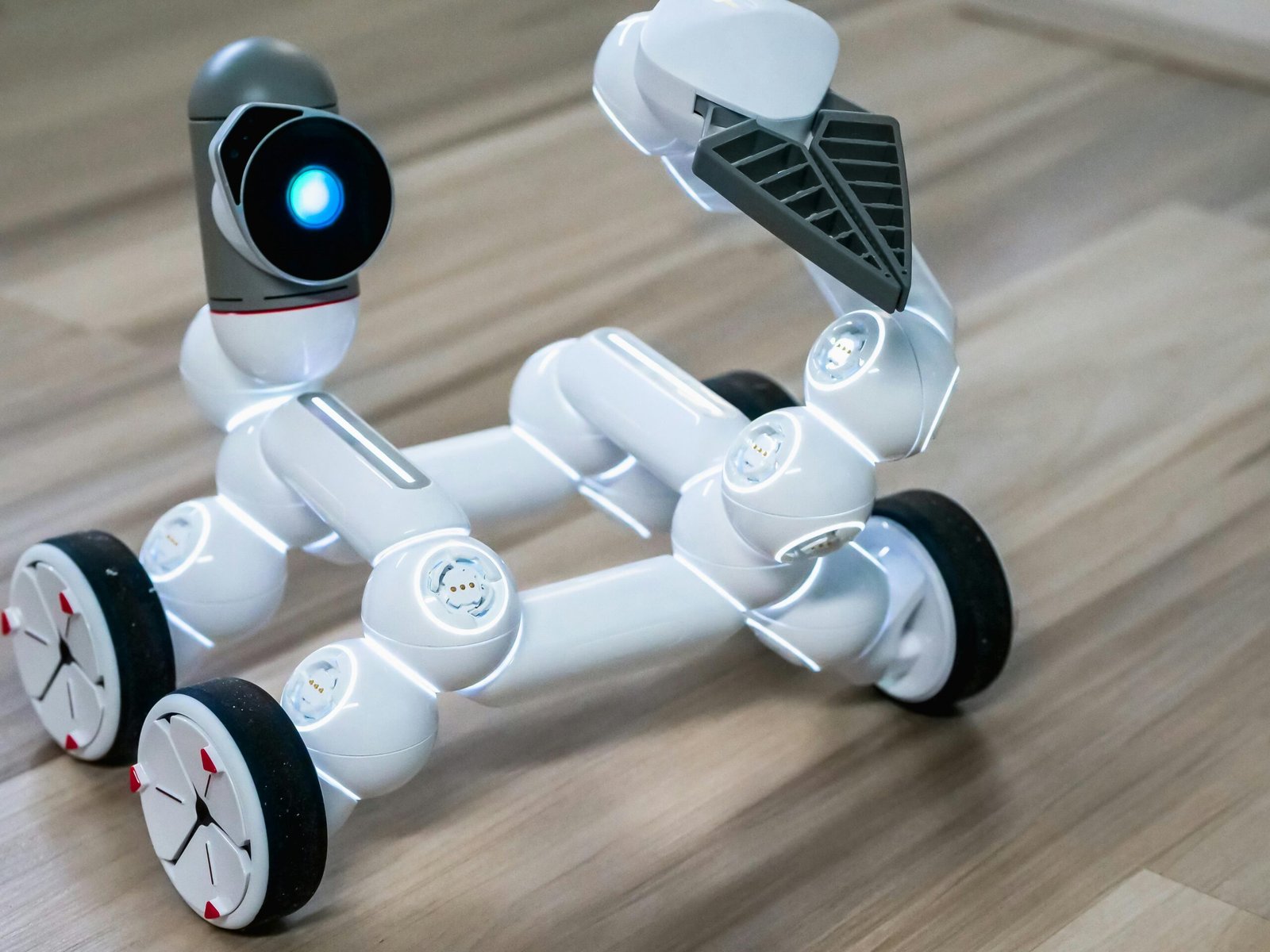

AI Transforming Industries in 2026 is no longer just a technological upgrade — it has become a foundational economic driver reshaping business models, productivity, and global competitiveness. Unlike the early hype cycles of AI, 2026 marks the phase where companies deploy AI at scale and measure tangible ROI.
From healthcare diagnostics to financial risk modeling, autonomous supply chains, immersive learning environments, and automated manufacturing processes, AI is the backbone of the next industrial era.
📑 Table of Contents
- Introduction
- Why AI Transforming Industries in 2026 Matters
- Key Drivers of AI Adoption
- 12 Powerful Shifts in AI Transforming Industries in 2026
- Real-World Industry Case Studies
- Economic Impact & Opportunities
- Challenges & Risks
- Future Outlook
- Internal + External Resources
- Conclusion
Why AI Transforming Industries in 2026 Matters
Governments, corporations, and startups are all racing to leverage AI because it accelerates:
- efficiency
- innovation
- cost reduction
- accuracy
- decision-making
- personalization
- automation
The companies that master AI in 2026 will control market dominance in 2030 and beyond.
Key Drivers of Adoption
The rise of AI Transforming Industries in 2026 is fueled by:
1. Cheaper Compute Power
Cloud GPUs and edge accelerators made deployment cost-effective.
2. Smarter Foundation Models
New generative AI architectures produce human-level work outputs.
3. Automated Workflows
AI agents now handle real operational tasks, not just predictions.
4. Data Explosion
IoT, finance, healthcare, and retail generate massive processable data streams.
5. Skills & Workforce Upskilling
Governments and private sectors invested in AI reskilling programs.
12 Powerful Shifts in AI Transforming Industries in 2026
Below are the most transformative industry changes:
1. Healthcare: AI Diagnostics & Predictive Care
AI reads scans, lab data, and patient histories with high precision, enabling:
- early disease detection
- personalized medicine
- drug simulation
- robotic-assisted surgery
- AI triage chatbots
Hospitals can predict patient deterioration hours before human detection.
2. Finance: AI Risk, Fraud & Robo-Advisors
Banks use AI for:
- credit scoring
- fraud detection
- algorithmic trading
- wealth management
- compliance audits
AI reduces operational risk and boosts financial inclusion.
3. Retail: Hyper-Personalization & Smart Inventory
Retailers deploy AI for:
- dynamic pricing
- demand forecasting
- checkout-free stores
- smart supply chains
- product recommendation engines
Personalized shopping is now baseline expectation.
4. Manufacturing: Autonomous Factories
Industrial AI automates:
- assembly lines
- robotics scheduling
- predictive maintenance
- quality inspection
Factories operate with near-zero downtime.
5. Logistics & Transportation: AI Routing & Fleet Automation
AI optimizes:
- route planning
- delivery estimates
- fleet maintenance
- warehouse robotics
- cross-border logistics paperwork
Autonomous trucking pilots expanded worldwide.
6. Education: Adaptive Learning Environments
AI tutors create individualized learning paths using:
- performance analytics
- cognitive profiling
- real-time difficulty adjustments
Students learn faster with higher retention rates.
7. Agriculture: Precision Farming
AI monitors:
- soil health
- irrigation scheduling
- crop disease detection
- autonomous tractors
Feeding the global population becomes more scalable.
8. Cybersecurity: Autonomous Threat Hunting
AI detects threats in milliseconds and neutralizes attacks before escalation.
AI security agents are replacing reactive monitoring.
9. Media & Entertainment: Content Automation
AI produces:
- scripts
- marketing assets
- dubbing
- music
- video compositions
- localization
Studios reduce production costs and timelines drastically.
10. HR & Workforce Management
AI screens resumes, predicts attrition, automates onboarding, and assists in upskilling.
11. Government & Public Sector AI
Governments use AI for:
- taxation analysis
- urban mobility optimization
- health crisis forecasting
- digital citizen services
12. Energy: Smart Grid Optimization
AI stabilizes power networks and forecasts energy demand across cities.
Economic Impact & Opportunities
McKinsey projects AI could add $4–6 trillion to global GDP by 2030.
Major opportunity segments include:
- AI agents
- data infrastructure
- AI healthcare devices
- industrial robotics
- AI cybersecurity
- autonomous mobility
- multimodal generative AI
Challenges & Risks
Despite growth momentum, AI adoption faces risks:
❌ regulation
❌ data governance
❌ job displacement fears
❌ bias in models
❌ security vulnerabilities
❌ compute inequalities
Countries that solve these move ahead economically.
Future Outlook Beyond 2026
AI + Robotics + IoT + Blockchain will converge into:
self-healing economies
where supply chains adjust themselves, power grids optimize autonomously, and digital assistants negotiate tasks.
Internal Links for Topic Authority
Link to your other content:
- Digital Payments & Fintech in 2026
- Quantum Computing Innovations
- Cloud Computing & Business Migration
- Blockchain & Web3 in 2026
External Resources (DoFollow)
Credible outbound references:
- Stanford AI Index Report
- McKinsey AI Impact Research
- MIT CSAIL Industry Studies
- WHO Digital Health Strategy
- Gartner Emerging Tech Reports
Conclusion
AI Transforming Industries in 2026 marks a pivotal shift toward automation-first economies. The organizations that embrace AI not as a tool but as a core operational engine will lead global markets for decades.